Home › Services › Line jetting & flushing
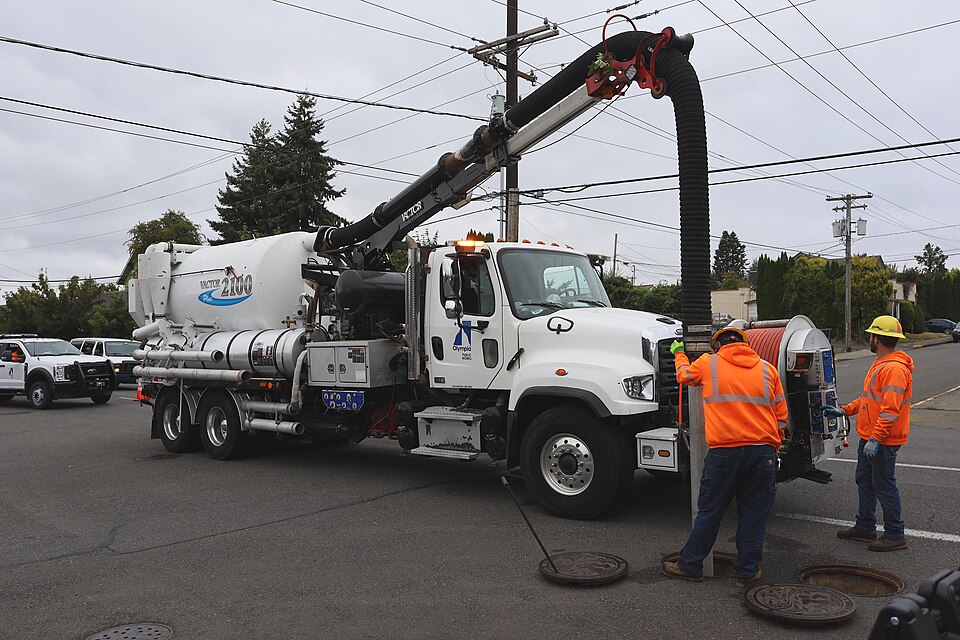
Grease Line Jetting and Drain Flushing in Toronto
Also called: hydro jetting, drain flushing, kitchen line cleaning. 3 approved companies listed, in alphabetical order.
The approval this page requires
The City's Kitchen & Outdoor Practices page says that anyone unclogging a privately owned plumbing or sewer line must flush and vacuum it with a flusher truck approved by the Ministry of the Environment, Conservation and Parks, and that grease and the waste from line flushing must be transported by a Ministry-approved waste carrier.
To be listed here, a company must hold a current Ontario waste approval (an ECA for a waste management system or an EASR registration for a waste transportation system) that we found in Access Environment. Work on drains outside the building, such as the private sewer connection, also falls under the City's Drain Contractor licence; ask whoever does that part of the job for theirs.
Approved companies
| Company | Phone | Based in | Approval we checked | Website |
|---|---|---|---|---|
| JP Grease Trap Service Inc. | 416-294-6410 | 224 Milvan Drive, Unit G, North York, ON M9L 2A5 | Ontario EASR R-004-1112755394checked November 11, 2026 | Website |
| POM Plumbing | (905) 625-8777 | 58 Six Point Rd, Etobicoke, ON M8Z 2X2 | Ontario EASR R-004-5467223653checked November 11, 2026 | Website |
| Walker Grease Trap Services | 416-747-6584 | 290 Garyray Drive, Toronto, ON M9L 1P4 | Ontario ECA A840396checked November 11, 2026 | Website |
Listings are free. A listing is not an endorsement. Spotted something out of date? Tell us.
Is your business approved to flush and vacuum blocked kitchen lines and not listed here? Email us at [email protected] with your company name, website and your Ontario ECA or EASR number. We check it in Ontario's Access Environment registry and add you. Listings are free.
Why the line clogs even when the trap is serviced
An interceptor only protects what's downstream of it. Grease still travels the pipe between your sinks and the unit, and some always slips past on the outlet side, especially if the unit runs past 25 per cent. As it cools it sticks to the pipe walls and catches food solids, and over months the pipe narrows. Kitchens on older Toronto streets, where drains are long, cast iron and run through cold basements, tend to see it sooner.
What jetting does, and what the City requires
Jetting sends water through the line at high pressure from a hose with a rear-facing nozzle that scours the pipe walls as it travels. On a grease line, the loosened material is vacuumed out rather than pushed further down. That's why the City's rules for unclogging a privately owned line call for a flusher truck approved by the Ministry of the Environment, Conservation and Parks, and for the waste from line flushing to go with a Ministry-approved carrier (Kitchen & Outdoor Practices).
A plunger, a hand snake or a kettle of boiling water may get a sink draining for the night. None of them removes the grease, and the City bans hot water and chemicals as a way to push grease through an interceptor.
Signs it's time
- Several sinks or floor drains slow down at once
- Gurgling from a floor drain when the dish machine empties
- Water backing up into the floor drain nearest the interceptor
- Odours that come back within days of a pump-out
- A carrier noting grease on the outlet side of the unit
What to expect on the visit
The crew locates a cleanout, runs the jetter through the line in sections, and vacuums the material that comes back. Many add a camera inspection afterward so you can see whether the pipe is clear, cracked or sagging. If the blockage is past your property line, in the private sewer connection to the street, that's drainage work under the City's Drain Contractor licence.
Questions to ask
- What is your Ministry approval number for the flusher or vacuum truck?
- Where will the waste go, and will I get a receipt showing it?
- Will you camera the line afterward, and can I keep the video?
- Do you jet from the kitchen side, the interceptor side or both?
- Can you come before service, early in the morning?
Keeping lines clear between visits
Scrape plates into the bin, keep strainers on every sink drain as the City requires, and keep the pump-out schedule tight. A line that needs jetting every few weeks usually points to an interceptor that is too small or serviced too rarely, and that's worth raising with your carrier and a licensed plumber.